The true value of a Portuguese residency permit isn’t the right to live in Lisbon; it’s the irrevocable sovereignty of a European Union passport five years down the line. You recognize that the portugal golden visa path to citizenship is a sophisticated multi-year commitment that requires more than just an initial capital injection. It’s a strategic maneuver designed to protect your family’s mobility and wealth through a disciplined adherence to evolving European standards.
You likely feel the weight of regulatory uncertainty as European residency rules undergo continuous scrutiny. This comprehensive 2026 blueprint provides the clarity you require; it serves as a methodical guide for global investors who prioritize procedural integrity and long-term stability. We’ll examine the mandatory physical stay requirements, the specific documentation necessary for a successful naturalization application, and the latest AIMA processing timelines. By aligning your investment with these precise requirements, you can transform a temporary residency permit into a permanent legacy of global freedom and security.
Key Takeaways
- Analyze the five-year strategic timeline required to transition from initial residency to full European Union citizenship.
- Evaluate the minimal physical presence requirements that distinguish the portugal golden visa path to citizenship from other European residency programs.
- Prepare for the final naturalization phase by understanding the A2 language proficiency standards and the comprehensive due diligence requirements.
- Implement a long-term risk mitigation strategy to navigate potential regulatory shifts and ensure the security of your global mobility.
The Strategic Value of the Portuguese Path to Citizenship
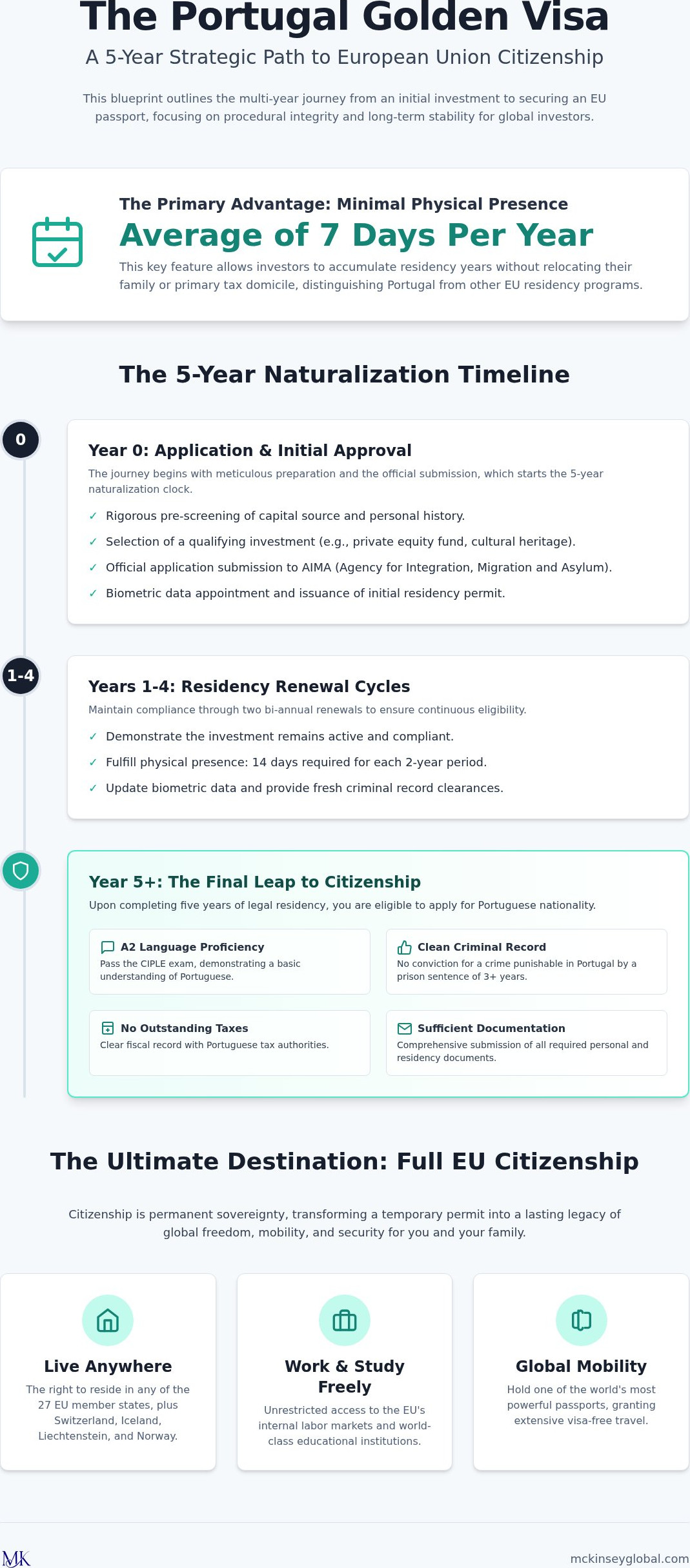
The Portugal Golden Visa functions as a bridge to European sovereignty; it offers a structured residency-by-investment framework that leads directly to naturalization. For the sophisticated investor, the portugal golden visa path to citizenship represents a long-term asset rather than a short-term travel convenience. Portugal’s minimal stay requirement, which averages only seven days per year, is the primary differentiator for high-net-worth individuals. This allows for the accumulation of residency years without the immediate necessity of relocating one’s family or primary tax domicile. By securing this status, investors gain unrestricted access to the Schengen Area and a strategic entry point into the European Union’s internal labor markets.
The 2026 Regulatory Landscape
The operational transition from the former SEF to the newly established AIMA (Agency for Integration, Migration and Asylum) has introduced a more rigorous layer of administrative oversight. Applicants must navigate specific investment thresholds that prioritize capital transfers into qualifying investment funds or contributions to cultural and scientific research. Maintaining strict compliance with these evolving standards is essential. Any procedural error during the initial application or subsequent renewals can jeopardize the entire naturalization timeline. A disciplined approach to documentation is the only way to ensure that your path to a European passport remains secure.
Residency vs. Citizenship: Understanding the Distinction
It’s vital to distinguish between the legal rights afforded by a residence permit and those granted by a national passport. A residence permit provides the legal right to stay and travel within the Schengen zone, yet it remains a temporary status subject to renewal and shifting political climates. In contrast, citizenship offers permanent sovereignty, including the right to live and work anywhere in the EU. The portugal golden visa path to citizenship relies on a five-year naturalization clock that begins the moment your residency permit is issued. This timeline allows for the creation of a robust “Plan B,” providing a secure exit strategy or a secondary home that can be activated at your discretion. Strategic foresight requires understanding that while residency is the vehicle, citizenship is the ultimate destination for wealth and mobility protection.
The 5-Year Timeline: From Initial Investment to Naturalization
Success on the portugal golden visa path to citizenship requires a meticulous multi-year schedule. It isn’t a passive wait; it’s an active period of regulatory adherence. The “5-year clock” for naturalization eligibility is the most critical metric in this journey. Recent legislative adjustments now allow the five-year period to be calculated from the date the residency application is officially submitted, rather than the date of card issuance. This change significantly accelerates the timeline for those navigating the current administrative backlog, providing a more predictable horizon for their ultimate goal.
The Application and Approval Phase
Year zero begins with a rigorous pre-screening of your capital source and personal history. Once you select a qualifying investment, such as a private equity fund or a cultural heritage project, the initial filing occurs. You’ll then attend a biometric appointment to provide physical data for the residency registry. While processing times vary, the current administrative environment under AIMA requires patience and precise documentation. Ensuring your file is beyond reproach at this stage prevents delays that could stall your eligibility for years. For personalized guidance on these initial steps, you might consider engaging an independent boutique advisor to oversee the due diligence process.
The Renewal Cycle and Compliance
Maintaining your status from years one through five involves a series of bi-annual renewals. You must demonstrate that your investment remains active and that you’ve satisfied the physical presence requirements. These requirements, though minimal, are non-negotiable. Every two years, you’ll update your biometric data and provide fresh criminal record clearances from your country of origin and any jurisdiction where you’ve resided. This continuous vetting ensures that by the time you reach the five-year milestone, your transition to citizenship is a matter of procedural formality rather than a legal hurdle. Precision in tracking these deadlines is the hallmark of a successful applicant who remains committed to the portugal golden visa path to citizenship.
Nuances of the Physical Presence Requirement
The portugal golden visa path to citizenship is defined by its unparalleled flexibility regarding physical residence. While most European residency programs require investors to spend at least 183 days per year within the country to maintain their status, Portugal mandates a mere seven days per year. This requirement is typically satisfied in two-year blocks, totaling 14 days of presence for each renewal cycle. This distinction is critical for global entrepreneurs who manage international interests and can’t commit to a permanent relocation during the initial five-year period. This flexibility demands a disciplined approach to record-keeping to ensure that the eventual naturalization application isn’t compromised by a lack of evidence.
Documenting Your Stay in Portugal
Proving your presence to AIMA requires more than just a passport stamp, especially since travel within the Schengen Area often leaves no official trail. You should maintain a dedicated file of boarding passes, hotel invoices, and receipts from local transactions during your visits. These documents serve as secondary evidence if your entry or exit wasn’t recorded by border authorities. It’s also advisable to coordinate with a fiscal representative who can ensure your local tax compliance remains aligned with your residency status. Failing to account for the full 35-day requirement over the five-year period is a common pitfall that can lead to the rejection of a citizenship petition. Meticulous documentation is the only way to mitigate the risk of administrative scrutiny during the final vetting phase.
Physical Presence vs. Legal Residency
Portuguese law recognizes a distinction between being physically present and maintaining “effective residency.” For Golden Visa holders, the law accepts the minimal seven-day stay as sufficient to maintain the legal link required for naturalization. This unique legal framework allows you to remain a non-resident for tax purposes while the five-year citizenship clock continues to run. It’s a strategic advantage that few other jurisdictions offer. By balancing your global business obligations with these brief, documented visits, you satisfy the legal criteria for “effective residency” without disrupting your existing lifestyle or financial structures. This methodical adherence to the stay requirement is the foundation upon which your future EU citizenship is built. It ensures that your path remains compliant with Portuguese standards while respecting the demands of a sophisticated global career.
The Final Leap: Transitioning from Residency to Citizenship
Reaching the five-year milestone is a significant achievement, yet the transition from residency to full sovereignty is not an automatic progression. The portugal golden visa path to citizenship culminates in a formal naturalization petition that undergoes rigorous scrutiny by the Conservatória dos Registos Centrais. Unlike the residency renewals you’ve completed, this phase evaluates your integration and legal standing with much greater depth. You’re no longer merely maintaining a permit; you’re requesting a permanent place within the European Union. Preparing for this transition well in advance of your fifth anniversary ensures that your application is processed with minimal friction.
Mastering the CIPLE Language Exam
The most frequent hurdle for international investors is the A2 Portuguese language requirement. To qualify for naturalization, you must obtain the CIPLE (Certificado Inicial de Português Língua Estrangeira) certification. This “Basic User” level focuses on essential communication, such as understanding common expressions and participating in simple social interactions. For the busy professional, intensive courses or private tutoring are often the most efficient preparation strategies. While certain exemptions exist for citizens of Lusophone countries, most Golden Visa holders should prioritize this certification by year four to avoid administrative bottlenecks. If you require a detailed assessment of your eligibility or preparation strategy, you can contact our advisory team for a confidential consultation.
The Citizenship Application Vetting
The final vetting process involves a comprehensive review of your global legal record. You’ll need to provide updated criminal record certificates from every country where you’ve resided since the age of 16. These documents must be properly apostilled and translated into Portuguese to satisfy the Conservatória’s standards. Additionally, the authorities will verify that you’ve maintained a “genuine link” to the Portuguese community, which is largely evidenced by your compliant investment and residency history. In the 2026 landscape, processing times for naturalization can extend beyond 18 to 24 months due to high demand. A disciplined approach to this final documentation phase is the only way to safeguard your transition to a European passport. This methodical attention to detail ensures your status remains secure as you move toward final approval.
Strategic Advisory for the Long-Term Journey
The portugal golden visa path to citizenship is a multi-layered strategic initiative that spans half a decade. It’s not a simple transaction; it’s a long-term commitment to a foreign jurisdiction’s legal and social framework. Engaging a boutique advisory firm is essential because a standard agency often lacks the foresight to anticipate the regulatory shifts that occur over a five-year horizon. McKinsey Citizenship and Residency Solutions provides the steady, disciplined guidance required to navigate these complexities, ensuring that your initial investment remains compliant with the latest Portuguese standards. By aligning your residency goals with your broader wealth and tax planning, we ensure your transition to EU citizenship is both seamless and secure.
Beyond the Passport: Global Sovereignty
Securing a second citizenship is a fundamental component of a modern family wealth protection strategy. It offers more than just travel convenience; it provides future generations with the irrevocable right to live, work, and study across all European Union member states. This level of mobility acts as a hedge against regional instability and provides a secure foundation for international business expansion. Integrating this path into your long-term legacy requires a deep understanding of how residency affects your global tax footprint. For a more comprehensive look at the foundational elements of this program, you may consult our guide on Portugal Golden Visa: The Definitive Residency Strategy. This strategic alignment ensures that your move toward European sovereignty enhances your family’s overall security.
The McKinsey Approach to Residency Management
Our methodology is built upon the principles of confidentiality, procedural integrity, and meticulous attention to detail. We operate as a disciplined gatekeeper, managing every milestone of the portugal golden visa path to citizenship with the precision of a high-level consultancy. From the initial investment selection to the final naturalization filing, we prioritize risk mitigation at every stage. We understand that for our clients, the primary concern is the elimination of uncertainty. Our independent boutique approach allows us to provide objective, expert insight that is free from the conflicts of interest often found in larger brokerage firms. To understand the specific advantages of our professional oversight, read more about Golden Visa Advisory: Why Professional Guidance Matters. We remain committed to ensuring your journey from resident to citizen is managed with the highest level of professional care.
Securing Your Sovereign Future in the European Union
Transitioning from residency to a national passport requires more than capital; it demands a disciplined five-year strategy. You’ve seen that the portugal golden visa path to citizenship is built on precise milestones, from satisfying the seven-day stay requirement to mastering the A2 language proficiency exam. Each step must be documented with meticulous care to survive the final legal review by Portuguese authorities. Success isn’t found in the initial investment alone, but in the rigorous adherence to the naturalization timeline that follows.
Navigating this multi-year landscape alone introduces unnecessary risk. Our boutique firm provides meticulous 5-year compliance tracking and specialized expertise in complex naturalization cases. We offer an independent, conflict-free advisory approach that prioritizes your long-term security over short-term gains. To ensure your application remains beyond reproach, you’re invited to Consult with our Strategic Advisors on your Portugal Citizenship Path. Taking these steps today secures a legacy of mobility and wealth protection for your family’s future.
Frequently Asked Questions
How long does it actually take to get a Portuguese passport via the Golden Visa?
The transition from initial filing to holding a Portuguese passport typically requires seven years of strategic planning. While the legal eligibility for naturalization begins after five years of residency, the final administrative processing by the Conservatória can take an additional 18 to 24 months. Recent legislative changes allow the five year clock to begin upon the submission of your application, which offers a more predictable timeline for those on the portugal golden visa path to citizenship.
Do I need to live in Portugal to qualify for citizenship?
You aren’t required to relocate permanently to Portugal to qualify for citizenship. The Golden Visa program is unique for its minimal stay requirement, which mandates only seven days of physical presence per year. This allows global investors to maintain their primary residence and tax domicile elsewhere while accumulating the five years of legal residency necessary for naturalization. You must document these brief visits carefully to satisfy the final vetting process.
What is the A2 language requirement for Portuguese citizenship?
The A2 requirement refers to the CIPLE exam, which certifies a Basic User level of Portuguese proficiency. This level demonstrates your ability to understand frequently used expressions and participate in simple social interactions. It’s a mandatory component of the naturalization petition for most applicants. Busy professionals often utilize intensive language programs to reach this standard by the fourth year of their residency, ensuring no delays occur during the final citizenship filing.
Can my family members also apply for citizenship through my investment?
Family members are eligible to obtain residency and citizenship alongside the primary investor through the family reunification process. This includes your spouse, dependent children, and in some cases, dependent parents. Each family member must satisfy the same five year residency period and the A2 language requirement to qualify for naturalization. This collective approach ensures that your entire family benefits from the long-term mobility and security provided by a European Union passport.
What happens to my investment after I receive Portuguese citizenship?
Once you’ve been granted Portuguese citizenship, you’re no longer legally required to maintain the qualifying investment. You may choose to liquidate your capital, divest from the investment fund, or sell the assets as your financial strategy dictates. Since your status is now permanent and irrevocable, your right to live and work in the European Union is no longer contingent upon a specific financial commitment within the Portuguese jurisdiction.
Is the Portugal Golden Visa path to citizenship still open in 2026?
The portugal golden visa path to citizenship remains an active and viable route for international investors in 2026. While the Portuguese government has removed real estate as a qualifying asset class, other pathways remain open. These include capital transfers into regulated investment funds, contributions to scientific research, and support for the recovery of national cultural heritage. These options continue to provide a secure framework for those seeking to align their capital with EU residency goals.
What are the main reasons a citizenship application might be rejected?
Citizenship applications are primarily rejected due to failures in procedural integrity or background vetting. Common reasons include a criminal record in any previous country of residence, insufficient documentation of the mandatory seven day annual stay, or failing to pass the A2 language exam. Administrative errors during the five year renewal cycle can also jeopardize the final petition. This highlights the necessity of professional oversight to ensure every variable is aligned with regulatory standards.
Can I travel freely within the Schengen Area while my citizenship is pending?
You can travel without a visa throughout the Schengen Area while your citizenship application is being processed. As long as you maintain a valid Portuguese residence card, you enjoy the same mobility rights as any other EU resident. This status allows you to conduct business and travel for leisure across 29 European countries. Your mobility remains protected during the administrative transition from a residency permit to a full national passport.