
Could the passport you carry today be the single greatest vulnerability in your 2026 wealth preservation strategy? For the modern global investor, understanding the dual citizenship benefits and disadvantages is now a critical component of a sophisticated risk mitigation plan. You likely recognize that total reliance on a single jurisdiction creates a level of concentrated risk that even the most diversified financial portfolio cannot fully offset. The pursuit of a second tier of sovereignty is no longer a matter of travel convenience; it is a fundamental requirement for maintaining long-term stability in an unpredictable geopolitical climate.
This report provides a comprehensive analysis of the legal and financial implications inherent in holding multiple nationalities. We will address your concerns regarding the intricacies of global tax compliance, the potential for conflicting civic duties, and the rigorous legal standards required to maintain your original citizenship. By the end of this evaluation, you will possess a structured framework to weigh these variables against your wealth protection objectives. Our preview includes a detailed look at mobility enhancements, the reality of military or jury obligations, and a strategic guide to selecting jurisdictions that prioritize your security and discretion.
Key Takeaways
- Develop a structured framework to weigh the dual citizenship benefits and disadvantages against your specific wealth protection and global mobility objectives.
- Evaluate the strategic role of a second nationality as a sophisticated geopolitical hedge, providing a secure contingency plan and expanded access for your family and assets.
- Identify and mitigate potential risks associated with multiple nationalities, including complex international tax reporting requirements and mandatory civic duties in specific jurisdictions.
- Compare the operational differences between Residency by Investment and Citizenship by Investment to determine the most efficient path for your long-term residency and security goals.
- Implement a rigorous due diligence strategy when selecting a new jurisdiction to ensure full compliance with international regulatory standards and long-term asset stability.
Understanding Dual Citizenship: Definition and Global Landscape in 2026
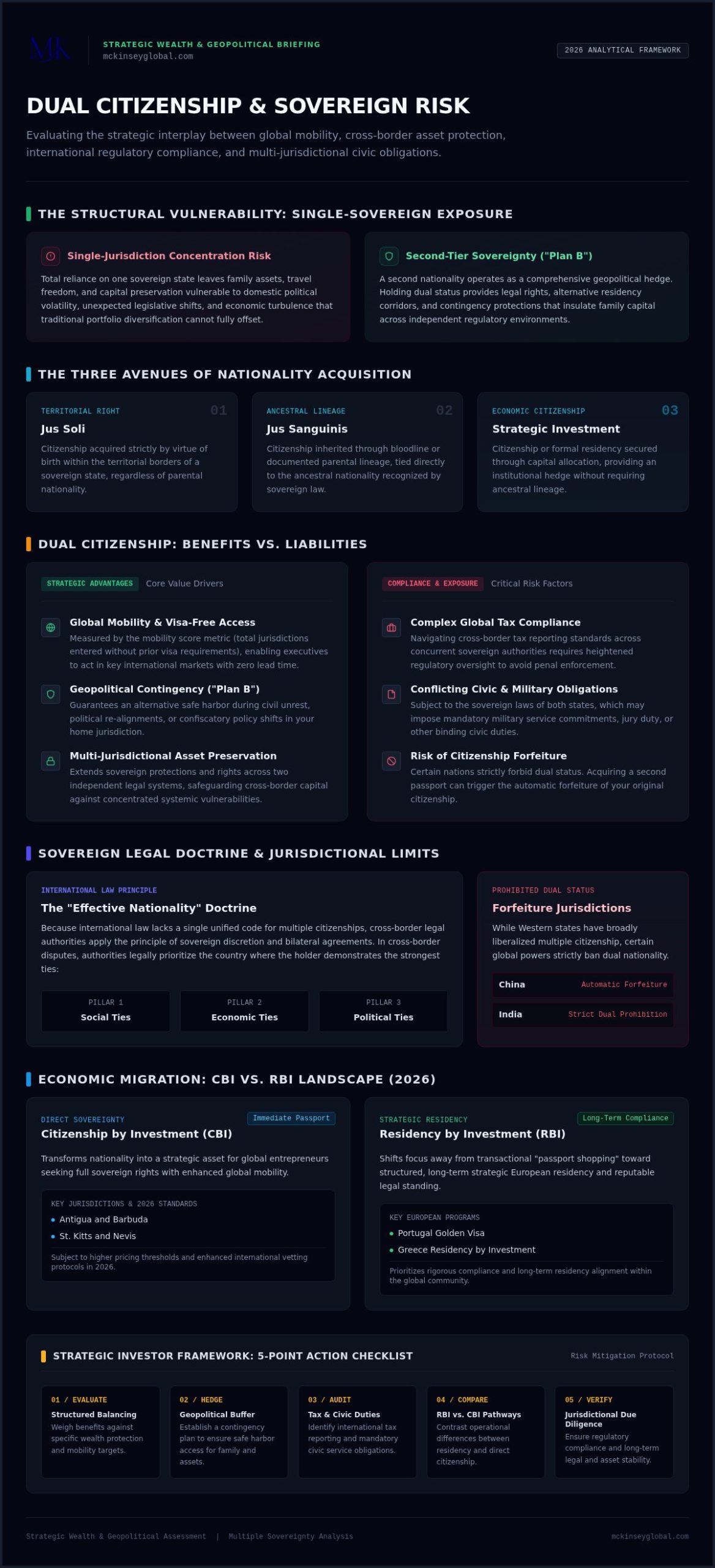
Dual citizenship describes a legal status where an individual is concurrently recognized as a national by two sovereign states. This arrangement grants the holder the rights and protections of both nations, though it also mandates adherence to the laws of both. As we enter 2026, the global landscape has reached a significant milestone; a record number of countries now permit their citizens to hold multiple passports. This shift reflects a broader acceptance of global mobility and the economic reality that talent and capital are increasingly fluid across borders.
The path to acquiring a second nationality typically follows one of three distinct avenues: birth within a territory (jus soli), ancestry through parental lineage (jus sanguinis), or strategic investment. For the modern investor, the latter has become a preferred method for securing a “Plan B” without the need for ancestral ties. However, the decision to pursue this path requires a meticulous evaluation of the dual citizenship benefits and disadvantages, as the legal implications vary significantly depending on the specific treaties and domestic laws involved.
The Legal Framework of Multiple Nationalities
International law does not provide a single, unified code for the legal status of multiple citizenship. Instead, it relies on a complex web of bilateral agreements and the principle of sovereign discretion. When disputes arise, legal authorities often apply the concept of “effective nationality,” which prioritizes the country where the individual maintains the strongest social, economic, and political ties. It’s essential to recognize that while many Western nations have liberalized their views, certain jurisdictions like China and India strictly forbid dual status. In these regions, the acquisition of a second passport often results in the automatic forfeiture of the original citizenship, a risk that demands careful consideration during the planning phase.
Economic Citizenship as a Growing Trend
The rise of Citizenship by Investment (CBI) has transformed nationality into a strategic asset for global entrepreneurs. 2026 stands as a pivotal year for this sector, particularly for Caribbean programs such as those in Antigua and Barbuda or St. Kitts and Nevis, which have implemented higher pricing thresholds and enhanced vetting protocols to meet international standards. Simultaneously, European options like the Portugal Golden Visa or Greece Residency by Investment continue to evolve, shifting the focus from simple “passport shopping” to long-term strategic residency. This evolution ensures that the dual citizenship benefits and disadvantages are balanced by rigorous compliance, providing investors with a more stable and reputable legal standing in the global community.
Strategic Benefits: Why Investors Seek Second Citizenships
In a 2026 environment defined by shifting alliances and regulatory volatility, a second citizenship is no longer a luxury. It’s a critical tool for strategic risk management. To make an informed decision, investors must look beyond travel perks to understand the full scope of dual citizenship benefits and disadvantages. Securing a “Plan B” in a stable jurisdiction provides a hedge against domestic instability, ensuring your family and capital remain protected regardless of local political shifts or economic downturns.
Global Mobility and Visa-Free Access
Global mobility remains a cornerstone of international commerce. A Tier-1 passport from a Caribbean nation like St. Kitts and Nevis or a European residency through the Portugal Golden Visa facilitates seamless entry into key global markets. Reviewing government guidelines on dual nationality helps clarify the legal rights you maintain while traveling between your home country and your new jurisdiction. A passport’s ultimate value is often quantified by its mobility score, which serves as a precise metric for the total number of jurisdictions accessible without the requirement of a prior visa. This access is vital for the executive who needs to respond to market opportunities with zero lead time.
Wealth Protection and Financial Privacy
Financial privacy and asset protection are equally vital for the modern investor. Holding multiple nationalities allows for the diversification of assets across varied legal frameworks, significantly reducing exposure to any single government’s fiscal policy. This status often opens doors to international banking and investment platforms that are otherwise restricted to specific nationals. It also simplifies the process of establishing offshore residency for investors, which can be a key component of a compliant and efficient global tax strategy. By spreading your legal footprint, you minimize the risk of sudden capital controls or aggressive wealth levies.
The advantages of this strategy extend well beyond the immediate holder. Citizenship acquired through investment is frequently inheritable, providing your descendants with permanent access to high-quality healthcare, premium education, and broader economic opportunities. This creates a legacy of security that transcends borders and protects future generations from regional instability. If you’re ready to evaluate how these programs align with your specific long-term objectives, exploring a tailored citizenship strategy is the logical next step in your wealth preservation journey.
The Disadvantages: Navigating Compliance and Obligations
While the advantages of multiple nationalities are compelling, a disciplined evaluation of dual citizenship benefits and disadvantages must account for the rigorous compliance demands imposed by modern sovereign states. By 2026, international regulatory bodies have intensified their oversight of multiple nationality holders; consequently, meticulous record-keeping has become a necessity rather than an option. Failure to recognize these obligations can transform a strategic asset into a significant legal liability.
Tax Residency and Global Compliance
Tax residency remains the most complex variable for the global investor. While most nations utilize a residence-based taxation model, some jurisdictions maintain a citizenship-based system that requires individuals to report global income regardless of their physical location. Navigating the Common Reporting Standard (CRS) as a dual national demands a sophisticated approach to avoid the pitfalls of double taxation or inadvertent non-disclosure. Developing a strategy for second citizenship for tax planning involves more than selecting a jurisdiction with favorable rates; it requires the careful alignment of your legal footprint with global reporting frameworks like FATCA and FBAR to ensure total transparency and adherence to international standards.
Legal and Civic Responsibilities
Legal obligations often extend beyond fiscal matters to include mandatory civic duties. Certain jurisdictions, such as Türkiye, maintain mandatory military conscription laws that may apply to new citizens or their descendants under specific conditions. It’s also essential to understand that the citizenship by investment framework has faced increased scrutiny from international blocs, leading to more stringent revocation clauses. These clauses often stipulate that citizenship can be rescinded if the holder fails to maintain their qualifying investment or is found in breach of enhanced vetting protocols.
The administrative burden of managing multiple identities shouldn’t be underestimated. You must ensure that all travel documents, tax filings, and residency permits remain current across all jurisdictions. For individuals holding sensitive government roles or those requiring high-level security clearances, a second nationality can present a conflict of interest that may restrict professional progression. The risk of citizenship revocation in cases of non-compliance is real, and it underscores the importance of ongoing professional oversight to maintain your status securely.
Citizenship vs. Residency: Choosing the Optimal Path
Determining whether to pursue full citizenship or a residency permit is a pivotal decision in any global relocation strategy. While Citizenship by Investment (CBI) offers an immediate second passport and permanent legal status, Residency by Investment (RBI) provides a tiered approach that may eventually lead to naturalization. To make a calculated choice, you must evaluate the dual citizenship benefits and disadvantages in the context of your specific timeline; for instance, an investor seeking immediate travel mobility will find CBI more efficient than the multi-year physical stay requirements often associated with residency programs.
The cost-benefit analysis between donation-based and real estate-based investments is equally critical. A non-refundable contribution to a government fund typically offers the lowest entry point and the fastest processing speed, yet it represents a “sunk cost.” Conversely, real estate investments allow for capital appreciation and potential rental yields, though they require ongoing management and are subject to the property market fluctuations of the host nation. Choosing between these paths depends on whether your primary objective is capital preservation or the rapid acquisition of a “Plan B” jurisdiction.
The European Model: Portugal and Greece
European programs remain the preferred choice for those who value long-term integration within the Schengen Zone. The Portugal Golden Visa continues to be a highly sought-after residency strategy, primarily because it offers a clear path to EU citizenship with minimal physical stay requirements. For investors who prioritize immediate access over eventual citizenship, Greece residency by investment serves as a strategic asset, providing permanent residency through a streamlined process. These programs are ideal if residency is sufficient for your global goals, allowing you to maintain your current nationality while securing a foothold in Europe.
The Caribbean Model: Speed and Efficiency
If speed and procedural certainty are your priorities, the Caribbean jurisdictions provide the most refined CBI frameworks in 2026. Evaluating Antigua and Barbuda investment options reveals a system designed for fast-track results, often concluding within a few months. For those seeking a more exclusive tier of sovereignty, St. Kitts and Nevis citizenship by investment maintains its reputation as the “platinum standard” of the industry. These nations have harmonized their vetting standards to ensure that all applicants undergo rigorous background checks, preserving the integrity and mobility score of their passports.
Selecting the right jurisdiction requires a meticulous alignment of your family’s needs with the regulatory landscape of the host country. If you’re ready to secure your future through a structured investment, you can consult with a specialist to review the most current 2026 program requirements and processing timelines.
Strategic Implementation: How to Acquire a Second Nationality
Implementation requires a transition from theoretical planning to tactical execution. For the investor, this means moving beyond a general understanding of dual citizenship benefits and disadvantages to a specific, actionable roadmap. Defining your primary objectives is the first step: are you seeking enhanced global mobility, a more efficient tax residency, or a secure jurisdictional hedge? Each goal points toward a different program, whether it’s a Caribbean CBI for speed or a European Golden Visa for long-term integration.
Once the objective is set, the focus shifts to the assembly of a compliant financial and legal dossier. This isn’t merely a matter of filling out application forms. It’s a comprehensive disclosure process that mirrors the transparency requirements of high-level corporate mergers. You’ll need to account for your global asset footprint, provide verified records of your professional history, and ensure that your current tax status is fully aligned with the requirements of the target jurisdiction. This meticulous preparation minimizes the risk of delays or rejections during the official review phase.
The Due Diligence Process
In 2026, government vetting protocols have reached an unprecedented level of stringency to satisfy international regulatory bodies. A comprehensive Source of Wealth audit serves as a critical hurdle that every applicant must clear to prove the legitimacy of their investment capital. Professional advisory isn’t optional anymore; it’s a prerequisite for ensuring that your application meets the meticulous standards of the host nation’s unit. This vetting process protects the integrity of the program and, by extension, the long-term value of the citizenship you’re acquiring.
Long-term Portfolio Management
Securing a second nationality is not a final destination but the beginning of an ongoing management phase. It’s prudent to review your citizenship portfolio every 3 to 5 years to ensure it remains aligned with your evolving financial and personal goals. Global tax treaties change, and visa-free agreements can shift suddenly; staying informed about these changes is vital for maintaining your mobility and security. Managing the transition effectively involves adjusting your tax residency and ensuring local compliance in your new home. If you’re ready to move from planning to action, it’s time to consult with our strategists to match your goals to a global program and secure your international standing.
Securing Your Sovereignty in an Evolving Global Framework
Addressing the complexities of international status requires a disciplined approach to risk management. The decision to expand your jurisdictional footprint hinges on a meticulous evaluation of the dual citizenship benefits and disadvantages. While the promise of enhanced mobility and wealth protection is significant; it’s a matter of balancing these assets against the rigorous demands of global tax compliance and civic obligations. The right strategy creates lasting stability. Success in 2026 depends on selecting a program that aligns with your specific long-term security objectives rather than short-term convenience.
Our firm operates as an independent boutique advisory with over five years of strategic experience in the investment migration sector. We specialize in Caribbean and European programs; we provide comprehensive application management tailored to the needs of ultra-high-net-worth clients. Our team ensures that every detail of your financial and legal dossier meets the highest standards of international vetting. Secure your global future with a bespoke citizenship strategy. Your path to a more stable and mobile future is within reach through precise planning and expert guidance.
Frequently Asked Questions
Is dual citizenship legal in the United States and the United Kingdom?
Dual citizenship is legally recognized in both the United States and the United Kingdom. US law doesn’t require a person to choose one nationality over another, while UK legislation explicitly permits British citizens to hold multiple nationalities. It’s vital to maintain valid travel documents for both jurisdictions to ensure seamless entry and exit. This legal standing provides a secure foundation for investors who want to balance their dual citizenship benefits and disadvantages without compromising their original identity.
Will I be double taxed if I hold dual citizenship?
Double taxation is not an automatic consequence of holding multiple nationalities. Most sovereign states utilize residence-based taxation, meaning you’re only taxed where you physically reside for more than 183 days. However, US citizens face a citizenship-based model that requires global income reporting. Utilizing bilateral tax treaties and professional fiscal planning ensures you remain compliant with international standards while minimizing your total tax liability across all jurisdictions.
Which country has the best citizenship by investment program in 2026?
The optimal program depends entirely on your strategic objectives. St. Kitts and Nevis is widely regarded as the industry’s platinum standard due to its longevity and rigorous vetting. Antigua and Barbuda offers an efficient path for those prioritizing processing speed. European options like the Portugal Golden Visa are superior for long-term integration. Selecting the right jurisdiction requires a meticulous alignment of your mobility goals with the current 2026 regulatory environment.
Can I lose my original citizenship if I acquire a second one?
The risk of losing your original citizenship depends on your home nation’s domestic laws. Countries like China and India strictly forbid multiple nationalities; acquiring a second passport results in the automatic forfeiture of your primary status. Many Western nations have more liberal frameworks that permit dual status. It’s essential to conduct thorough legal due diligence before proceeding to ensure your new status doesn’t inadvertently trigger the revocation of your existing rights.
Do I have to live in the country to maintain dual citizenship?
Most citizenship by investment programs, particularly those in the Caribbean, don’t require physical residency to maintain your status. You can enjoy the full range of rights without relocating. Conversely, residency by investment pathways, such as the Greece Residency by Investment program, often have specific stay requirements to maintain the permit or qualify for eventual naturalization. Understanding these distinctions is critical when weighing the dual citizenship benefits and disadvantages for your lifestyle.
How long does the process of getting dual citizenship through investment take?
Timelines vary significantly based on the chosen jurisdiction and the complexity of your financial dossier. Caribbean programs like those in St. Kitts and Nevis typically conclude within three to six months. European residency pathways often grant status in a similar timeframe, though the journey to full citizenship takes several years of maintaining a legal presence. Meticulous preparation of your application is the most effective way to ensure you meet government processing windows.
What are the military service requirements for dual citizens?
Civic obligations, including military service, are determined by the domestic laws of each nation. Jurisdictions like Türkiye maintain mandatory conscription for male citizens, which can apply to those acquiring nationality through investment. You must evaluate these requirements during the selection phase to avoid unexpected liabilities for yourself or your descendants. Strategic planning with a professional advisor helps identify jurisdictions where civic duties don’t conflict with your personal or professional commitments.
Can my family be included in my dual citizenship application?
Most investment migration programs allow for the inclusion of immediate family members in a single application. This typically encompasses your spouse and dependent children under a certain age. Some jurisdictions extend these provisions to include dependent parents or siblings, providing a comprehensive solution for generational security. Including family members requires additional vetting and documentation; however, it ensures that your entire household benefits from the mobility and security of a second tier of sovereignty.