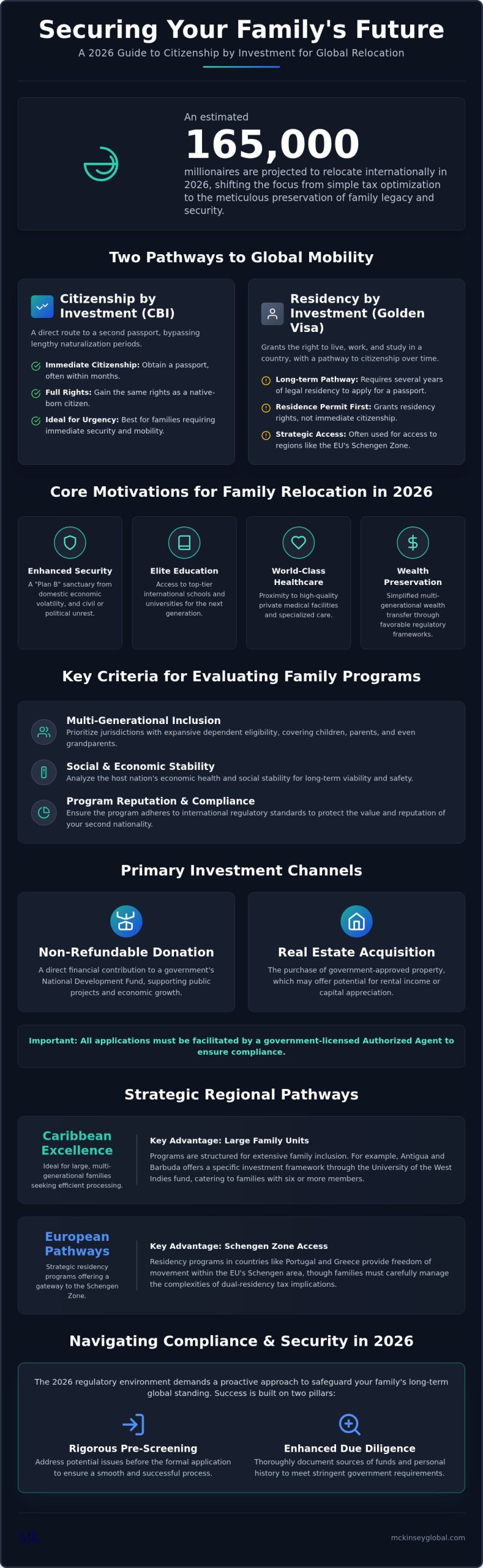
With an estimated 165,000 millionaires projected to relocate internationally in 2026, the search for global stability has moved beyond simple tax optimization to the meticulous preservation of family legacy. You’re likely aware that securing your family’s future in an era of geopolitical shifts requires more than a secondary travel document. It demands a sophisticated strategy that addresses the complexity of multi-generational inclusion and the need for a reliable “Plan B” sanctuary. Finding the best citizenship by investment programs for family relocation is no longer about the lowest entry price; it’s about identifying jurisdictions that offer a genuine connection to safety and prosperity.
This analysis provides the clarity you need to choose a program tailored to your family’s specific lifestyle and security requirements. We’ll examine the most secure investment pathways across the Caribbean and Europe, detailing the latest 2026 regulatory updates and investment thresholds. From the enhanced due diligence of the Eastern Caribbean states to the strategic advantages of Mediterranean residency, you’ll discover how to align your capital with your family’s long-term mobility and educational goals. This guide ensures your decision-making is grounded in the latest 2026 facts and strategic foresight.
Key Takeaways
- To ensure your strategy aligns with your family’s specific timeline for global mobility, it’s essential to distinguish between immediate citizenship and residency-to-citizenship pathways.
- When selecting the best citizenship by investment programs for family relocation, prioritize jurisdictions that offer expansive multi-generational inclusion and proximity to elite international education.
- For large family units, specific Caribbean solutions like the University of the West Indies fund in Antigua and Barbuda provide structured, government-approved investment frameworks.
- Through strategic residency programs in Portugal and Greece, families can secure Schengen Zone access while managing the complexities of dual-residency tax implications.
- By prioritizing rigorous pre-screening and due diligence, you can address the 2026 regulatory environment and safeguard your family’s long-term global standing.
Defining Citizenship by Investment for High Net Worth Families
The concept of “Economic Citizenship” has matured into a sophisticated instrument for family preservation. For high-net-worth families, the best citizenship by investment programs for family relocation provide more than just enhanced global mobility; they serve as a comprehensive hedge against regional instability. While individual applicants once sought these programs primarily for business efficiency, the 2026 landscape shows a decisive shift toward multi-generational security. This evolution reflects a growing need for a “Plan B” jurisdiction that offers long-term stability and risk mitigation for the entire family unit.
It’s vital to distinguish between Residency by Investment, often referred to as Golden Visas, and immediate Citizenship by Investment. Residency programs grant the right to live and work in a country but require several years of legal residency before one can apply for a passport. Conversely, citizenship programs provide a direct route to a second passport, often within months, bypassing the lengthy naturalization periods required by residency-based solutions. This distinction is critical for families requiring immediate security. For a comprehensive analysis of how these two approaches compare in the current regulatory environment, our strategic briefing on caribbean citizenship vs european residency by investment provides an in-depth framework for evaluating long-term jurisdictional stability.
The Core Mechanism of Investment Migration
Citizenship by Investment is a legal, government-sanctioned pathway to dual nationality through financial contribution. These programs typically operate through two primary channels: non-refundable donations to a national development fund or the acquisition of government-approved real estate. Identifying the best citizenship by investment programs for family relocation requires a granular understanding of these mechanisms. Each pathway requires a meticulous application process facilitated by an Authorized Agent. These licensed professionals act as the primary liaison between the family and the government, ensuring that every document meets the rigorous compliance standards of the host nation.
Why Families Relocate via Investment in 2026
In the current geopolitical climate, families prioritize jurisdictions that offer a sanctuary from domestic economic volatility and regulatory shifts. The strategic value of a second passport extends to the next generation, providing access to essential infrastructure and safety. Families benefit from:
- Elite international education systems and top-tier universities.
- World-class healthcare facilities in stable jurisdictions.
- Physical security and a safe haven during periods of civil or political unrest.
- Simplified multi-generational wealth transfer through favorable regulatory frameworks.
By selecting a program that aligns with these specific needs, families secure a legacy of mobility and safety that remains resilient against global uncertainty. This strategic planning minimizes long-term risk.
Key Criteria for Evaluating Family Relocation Programs
Selecting the best citizenship by investment programs for family relocation requires a transition from viewing the passport as a travel document to viewing the host nation as a functional primary or secondary home. Strategic evaluation must prioritize the continuity of family lifestyle and the protection of younger or more vulnerable dependents. A program’s value isn’t solely defined by its entry price but by the ecosystem it provides for multi-generational growth and security. This involves a rigorous analysis of social stability, economic health, and the institutional frameworks that safeguard your family’s global standing.
Educational infrastructure remains a non-negotiable variable for high-net-worth families. Proximity to international schools offering the International Baccalaureate or British curriculum ensures that children maintain a competitive edge for elite global university admissions. Simultaneously, healthcare standards must be evaluated for their accessibility to elderly parents. This includes the availability of private medical facilities and the quality of specialized care, ensuring that every family member’s wellbeing is accounted for within the new jurisdiction. The long-term viability of a program is also linked to the host nation’s adherence to international regulatory standards, which protects the reputation of your second nationality.
Dependent Eligibility and Age Limits
The definition of a “dependent” varies significantly across jurisdictions, impacting the overall utility of the application. While most programs include spouses and minor children, the premier solutions for relocation allow for the inclusion of adult children up to the age of 30, provided they remain in full-time education. Some Caribbean jurisdictions demonstrate exceptional flexibility by permitting the inclusion of unmarried siblings over 18 and grandparents with no specific age restrictions. It’s also vital to evaluate the protocol for post-citizenship additions; the ability to add new spouses or children after the initial application ensures the program remains a permanent and evolving family asset.
Quality of Life and Infrastructure
Relocation logistics depend heavily on the physical infrastructure and social stability of the host nation. Families often prioritize jurisdictions with high safety ratings and social cohesion, ensuring a seamless transition for expatriates. Connectivity is another strategic factor; the host nation must serve as a functional base with direct flight access to global financial hubs. Whether living in the country is a mandatory requirement or a strategic option, the underlying economic stability of the nation dictates the long-term security of the investment. If you require a detailed assessment of how specific jurisdictions align with your family’s unique composition, our advisors can provide a tailored strategic brief to guide your selection.
Caribbean Excellence: Top Programs for Large Family Units
The Caribbean remains the primary destination for those seeking the best citizenship by investment programs for family relocation, offering a mature regulatory environment and established legislative frameworks. For high-net-worth families, these jurisdictions provide a unique combination of speed, discretion, and comprehensive dependent inclusion. While Dominica and St. Lucia remain highly efficient and cost-effective donation pathways for smaller family units, families with more extensive structures often find superior strategic value in the tailored options offered by Antigua and Barbuda or St. Kitts and Nevis.
Selecting the appropriate Caribbean jurisdiction requires an analysis of how each program handles the complexities of multi-generational applications. In 2026, regional cooperation through the Eastern Caribbean Citizenship by Investment Regulatory Authority (ECCIRA) has standardized many aspects of the process, yet specific investment channels still offer distinct advantages for larger households. Success in these applications depends on aligning your family’s specific composition with the jurisdiction’s unique fund structures and residency requirements. Families weighing the immediate autonomy of a Caribbean passport against the structured integration of a European pathway will find a detailed comparative analysis in our guide to Caribbean citizenship vs European residency by investment, which addresses the shifting regulatory landscape and the approaching EU deadline for Caribbean programs.
Antigua and Barbuda Investment Options
Antigua and Barbuda is frequently cited as the premier choice for large families due to its innovative investment tiers. The University of the West Indies (UWI) Fund is a particularly strategic pathway, specifically designed for families with six or more members. By contributing a non-refundable $230,000 to this fund, a family of six secures citizenship while also receiving a one-year tuition scholarship for one family member at the university. This dual-purpose investment addresses both the need for security and the desire for educational advancement within the region.
For families who prefer asset-backed investments, the real estate option requires a minimum of $300,000 in a government-approved project, which must be held for five years. This contrasts with the National Development Fund (NDF), where a $230,000 contribution covers a family of up to four. For a deeper analysis of these thresholds, you may refer to our Antigua and Barbuda Investment Options: 2026 Guide. It’s important to note that the physical presence requirement has been adjusted to 30 cumulative days within the first five years of citizenship, reflecting the nation’s focus on building a “genuine connection” with its citizens.
St. Kitts and Nevis: Elite Family Security
Widely regarded as the “Platinum Standard” of the industry, St. Kitts and Nevis maintains its reputation through rigorous vetting and high-stakes precision. St. Kitts remains a top-tier choice for families due to its long-standing legislative stability. In 2026, the program requires all main applicants and dependents over the age of 16 to attend a mandatory interview, a measure that reinforces the integrity of the passport and ensures long-term security for your family’s global standing.
High-net-worth families often select the Sustainable Island State Contribution (SISC) for its processing efficiency, with a minimum contribution of $250,000 for a single applicant. This pathway is preferred by those who value speed and procedural certainty over the complexities of property management. For those seeking a detailed breakdown of the 2026 vetting process, our St. Kitts and Nevis Citizenship by Investment: The 2026 Strategic Guide provides a comprehensive briefing on the current regulatory landscape. This strategic foresight ensures that your family’s application adheres to the highest standards of international compliance.
European and Middle Eastern Pathways: Strategic Residency Solutions
While Caribbean programs offer immediate passports, European residency solutions present a sophisticated alternative for those prioritizing long-term integration into the European Union. These pathways are often considered among the best citizenship by investment programs for family relocation due to the high standard of living, educational infrastructure, and healthcare systems they provide. In 2026, the distinction between residency and citizenship remains a critical strategic variable; residency grants immediate lifestyle benefits while establishing a structured timeline toward a full second passport.
Middle Eastern hubs have also matured into primary choices for high-net-worth families seeking a bridge between East and West. These jurisdictions offer unique tax-neutral environments and rapid processing times, making them ideal for families who require a stable base for global commerce. By aligning your investment with the regulatory frameworks of these regions, you ensure your family’s mobility and security are protected by some of the world’s most resilient economies.
The Portugal Strategy: Residency to Passport
The Portugal Golden Visa remains a cornerstone of European migration strategy, even as its investment requirements have shifted. In 2026, the program focuses on capital transfers into government-approved funds, allowing families to diversify their portfolios while securing a foothold in the EU. The requirement for physical presence is exceptionally low, requiring an average of only seven days per year. This flexibility allows families to maintain their global business interests while accruing the five years of residency necessary to apply for citizenship. A significant advantage for growing families is Portugal’s birthright provision; children born to parents who have held residency for at least one year are eligible for citizenship at birth.
Middle Eastern Powerhouses: UAE and Türkiye
The UAE Golden Visa provides a robust 10-year residency framework, offering long-term stability in a tax-neutral environment. It’s an increasingly popular choice for families who value safety, social stability, and world-class infrastructure. Conversely, Türkiye Citizenship by Investment remains one of the fastest routes to a second passport through a minimum $400,000 real estate investment. This program is uniquely efficient, granting immediate citizenship to the main applicant, their spouse, and children under 18. To evaluate which jurisdiction best serves your family’s financial and mobility goals, you may consult our Turkey vs. UAE Residency by Investment: A Strategic 2026 Comparison.
Greece Residency by Investment offers immediate logistical advantages, particularly for families requiring unfettered access to the Schengen Zone. Unlike other programs, Greece does not impose a physical stay requirement to maintain residency, making it an ideal solution for those who aren’t yet ready for full relocation. For a detailed breakdown of the 2026 investment thresholds across different regions, our Greece Residency by Investment: 2026 Strategic Guide provides the necessary technical clarity. If you require a comprehensive evaluation of these pathways, you can schedule a strategic briefing with our advisors.
Navigating Compliance and Family Security in 2026
The final stage of securing a second nationality is the most critical for high-net-worth families: the navigation of complex global compliance frameworks. Identifying the best citizenship by investment programs for family relocation is not merely a matter of selecting a destination; it’s a process of ensuring that your family’s global standing remains unimpeachable. In 2026, international regulatory pressure from the European Union and the OECD has elevated vetting standards to an unprecedented level. This environment demands a strategic approach that prioritizes procedural integrity over the allure of expedited processing.
McKinsey Citizenship and Residency Solutions operates as a meticulous gatekeeper in this landscape. We recognize that any oversight in the initial application can have significant consequences for a family’s long-term mobility and reputation. By focusing on adherence to standards and the alignment of complex variables, we provide families with the clarity needed to mitigate risk. This disciplined approach ensures that your “Plan B” remains a permanent sanctuary rather than a temporary convenience, protecting your legacy for generations.
Vetting and Due Diligence Standards
The foundation of a secure application is a rigorous due diligence process that often employs the “Four-Eye” principle. This system involves multiple layers of independent review, where both the authorized agent and the host government’s specialized units scrutinize every financial and biographical detail. Such thoroughness is essential to protect the family’s long-term status against future legislative shifts. A clean compliance record is your family’s most valuable asset, ensuring that your second citizenship remains resilient against international regulatory scrutiny and potential program modifications. Families navigating multi-jurisdictional wealth structures should also review our comprehensive source of funds for citizenship by investment guidance to ensure their financial documentation meets the stringent 2026 forensic audit standards.
Strategic Implementation for Families
Timeline management is a core component of our strategic planning. From the initial consultation to the final issuance of passports, every step must be synchronized with your family’s broader financial and relocation goals. This requires close coordination with your existing tax and legal counsel to manage the implications of dual residency and global wealth structures. Choosing between a Citizenship by Investment: Donation vs Real Estate Strategy for 2026 is a decision that must be made within this holistic context. Our role is to guide you through these complexities with the insight of a global strategist, ensuring that every procedural requirement is met with precision. This methodical approach provides the professional progress and security that high-net-worth families require in an increasingly uncertain world.
Securing a Multi-Generational Legacy in a Globalized Economy
Identifying the best citizenship by investment programs for family relocation is a strategic imperative that requires a synthesis of legal precision and lifestyle planning. The 2026 landscape demands a move beyond simple document procurement toward a holistic evaluation of educational infrastructure, healthcare accessibility, and long-term jurisdictional stability. Whether your family’s needs align with the expansive inclusion of Caribbean programs or the structured integration of European residency, the focus must remain on procedural integrity to safeguard your global standing.
McKinsey Citizenship and Residency Solutions provides the disciplined guidance necessary to navigate these complex international frameworks. With over five years of specialist investment migration expertise and a dedicated focus on high-net-worth family relocation, our 100% compliance-driven advisory process ensures that every variable is meticulously evaluated. By prioritizing accuracy and strategic foresight, you can transform a financial contribution into a permanent asset for your descendants. Secure your family’s future with a bespoke citizenship strategy. Contact McKinsey Citizenship and Residency Solutions today. Your journey toward global mobility and security begins with a single, well-informed step.
Frequently Asked Questions
Which citizenship by investment program is best for a family of four?
Antigua and Barbuda is frequently cited as the optimal choice for a family of four due to its structured National Development Fund contribution. St. Kitts and Nevis also remains a primary contender for those seeking the best citizenship by investment programs for family relocation. These jurisdictions provide a stable regulatory environment and clear legislative frameworks. The final selection should align with your family’s specific requirements for global mobility and long-term security.
Can I include my parents and grandparents in a CBI application?
Most Caribbean programs facilitate the inclusion of parents and grandparents, provided they demonstrate financial dependency on the main applicant. Antigua and Barbuda and Grenada are particularly noted for their generous dependency rules, which often lack strict age ceilings. This flexibility allows high-net-worth families to maintain their unit’s cohesion while establishing a secure “Plan B” sanctuary. It’s essential to verify the specific dependency criteria for each jurisdiction during the strategic planning phase.
What is the fastest citizenship by investment program for families in 2026?
Caribbean jurisdictions currently offer the most efficient processing speeds, with applications typically finalized within four to eight months. St. Kitts and Nevis and Dominica are recognized for their methodical administrative protocols, though the 2026 mandatory interview requirements must be factored into the timeline. For families seeking immediate results outside the Caribbean, Türkiye provides a direct pathway to citizenship within approximately eight months, granting passports to the main applicant, spouse, and minor children.
Do I need to live in the country to maintain my second citizenship?
Physical residency requirements vary significantly between citizenship and residency-based programs. Most Caribbean citizenship programs don’t require you to live in the country, though Antigua and Barbuda mandates 30 days of cumulative presence over five years. European residency solutions like the Portugal Golden Visa require only seven days of stay annually to maintain status. This flexibility allows families to secure their global standing without disrupting their existing business interests or lifestyle commitments.
How much does citizenship by investment cost for a family?
The investment thresholds depend on the jurisdiction and the family’s size when evaluating the best citizenship by investment programs for family relocation. In 2026, a family of four can access the Dominica Economic Diversification Fund with a $250,000 contribution. Alternatively, real estate options in St. Kitts or Antigua begin at $300,000 or $325,000. These amounts reflect the government-mandated investment and don’t include administrative fees. A precise financial brief is necessary to account for your family’s variables.
Is my second citizenship permanent and can it be passed to future generations?
Citizenship acquired through investment is a permanent legal status that is typically hereditary. While the right to pass citizenship to future generations is a standard feature, the specific mechanisms for “citizenship by descent” can vary between Caribbean and European jurisdictions. Strategic implementation allows for the addition of new spouses or children after the initial application is approved. This ensures that your second nationality remains a functional and evolving asset for your family’s multi-generational legacy.
Will my children get access to local schools and universities with this citizenship?
Citizens by investment enjoy the same educational and healthcare rights as those born in the host nation. This includes access to local schools and regional universities. The Antigua and Barbuda UWI Fund specifically includes a one-year tuition scholarship for a dependent at the University of the West Indies. In Europe, residency and citizenship programs provide a gateway to some of the world’s most prestigious international schools, ensuring your children’s educational continuity and global competitiveness.
What are the common reasons for family application rejections?
Rejections are usually the result of failing the rigorous due diligence checks or providing inconsistent financial data. Governments prioritize the integrity of their programs, meaning any ambiguity regarding the source of funds for citizenship by investment or a previous visa denial can lead to a refusal. A clean compliance record is non-negotiable for all family members over 16. Meticulous pre-screening by a specialized advisor is the most effective way to identify potential risks and ensure procedural success.